Est. London, 1925
Two silk handkerchiefs. One revolutionary idea. A legacy reborn for modern movement.
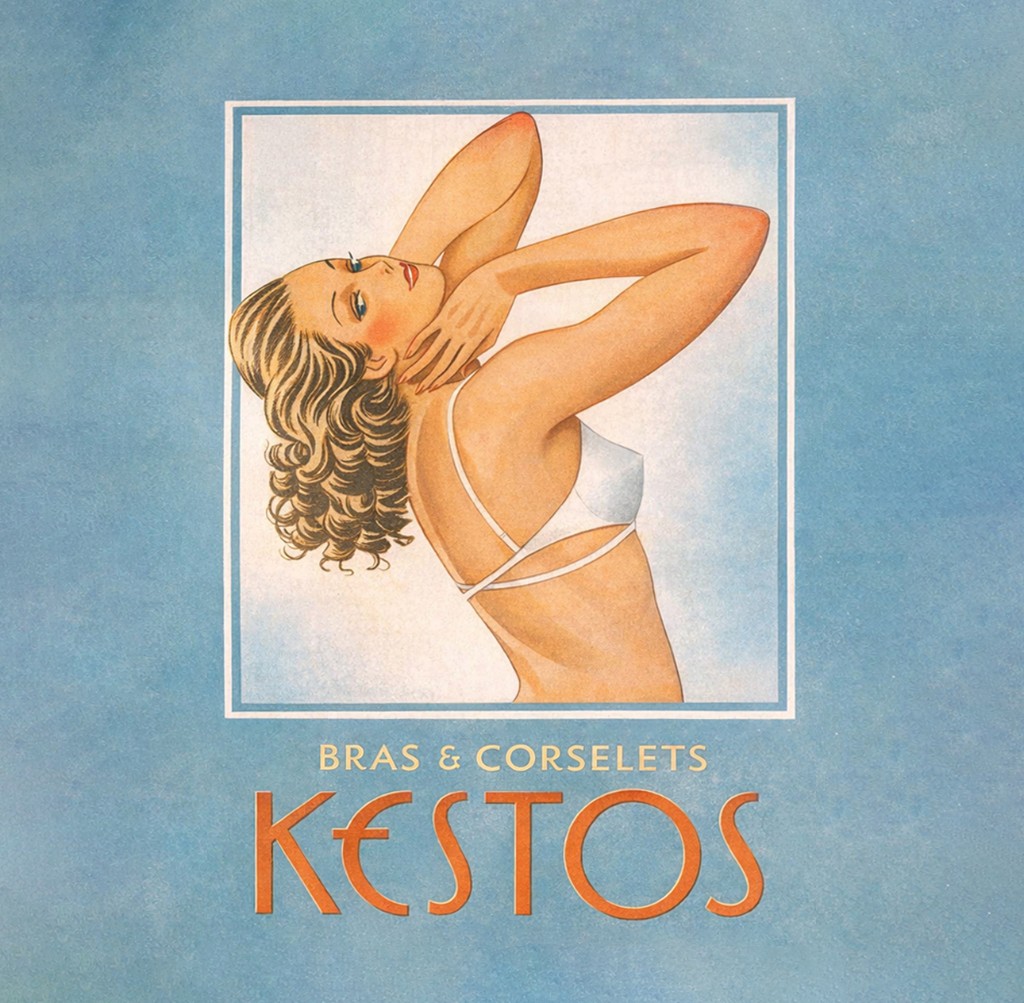
Two Silk Handkerchiefs Changed Everything
In 1925, Rosamond Llewellyn-Jones took two silk handkerchiefs and crossed them over the bust. No wires. No boning. No rigid structure. Just geometry working with the body.
The result was the Kestos bra — the first modern brassiere — and it changed how women dressed, moved, and lived. The design was so ahead of its time that its principles still outperform most construction methods used today.
"Support through tension, not compression — a philosophy that defined a century."
Original Posters & Designs

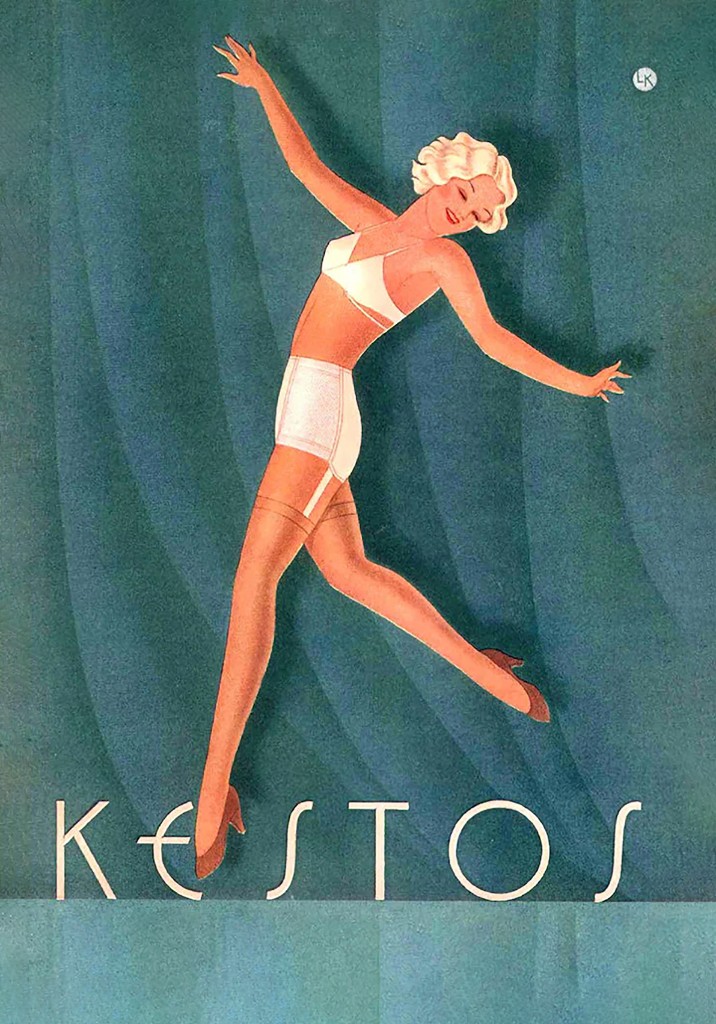
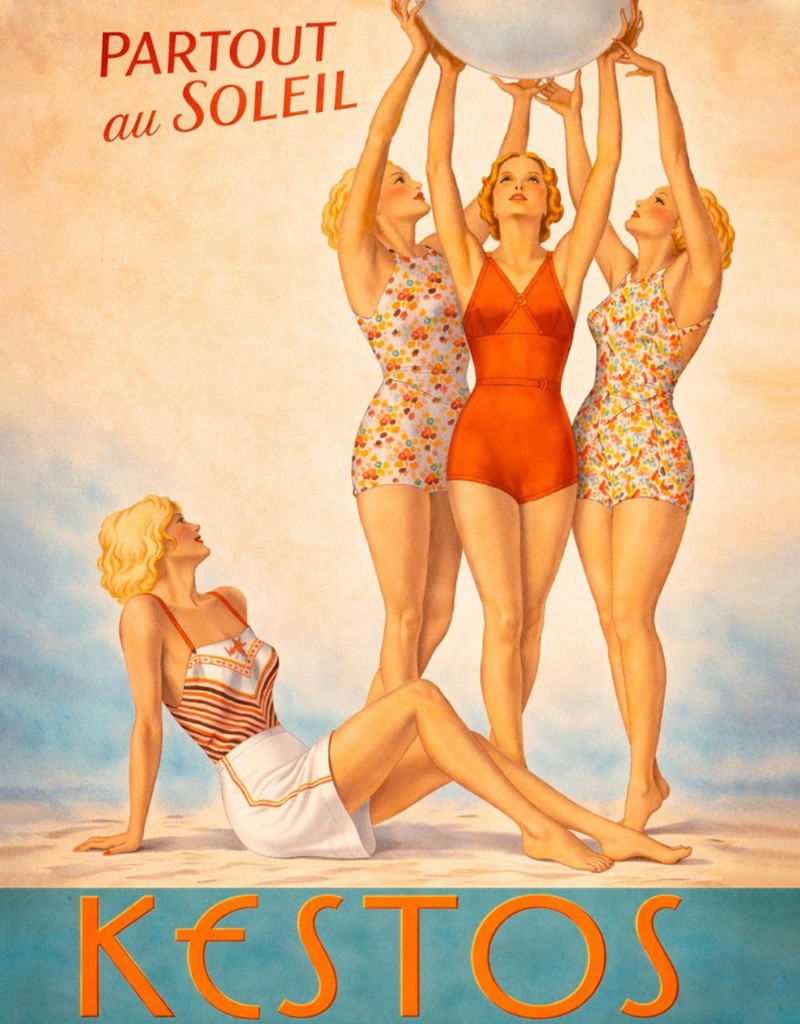


"The scientific cut of this lovely piece of lingerie causes a natural centre depression, and due to its gentle cross-pull and uplift, it moulds the figure to the firm, rounded contours of youth and charm."— From the original Kestos advertisement, c. 1930s
Heritage Architecture, Modern Engineering
The original Kestos used two overlapping triangular cups with straps that crossed at the back — creating support through elegant tension rather than rigid boning. A century later, we've reengineered that exact geometry into Cross-Way Pull technology for fluid-state sports apparel.
1925 Original
Crossed silk panels with adjustable button-fastened straps. Support through geometry, not compression.
2025 Revival
Recycled polyamide with adaptive compression. The same crossover principle, engineered for land and water.

Key Moments
The Patent
Rosamond Llewellyn-Jones files the crossed-front patent in London. The Kestos bra is born — two triangular cups overlapping at centre front, straps crossing at centre back. Support through tension, not compression.
Global Expansion
Kestos expands across Europe and into the United States. The design is celebrated in Vogue for its comfort and innovation, becoming synonymous with the modern silhouette.
Art Deco Advertising
Leo Klin, artist and co-director, creates the iconic "When Dancing Wear a Kestos" campaign — Art Deco illustrations of elegant women in motion that define the brand's visual identity for a generation.
The Golden Age
The brand name "Kestos" becomes generically interchangeable with "brassiere." Featured in fashion editorials, adopted by athletes and performers, the design spawns countless imitators across Europe and America.
"We Thought Of It First"
Frustrated by copycats, Kestos boldly proclaims its originality. During WWII rationing, the brand adapts under the CC41 utility scheme, proving the design's enduring practicality.
The Revival
A century later, Kestos returns — reengineering the original crossover geometry into fluid-state sports apparel. One set for land and water, powered by the same principle that changed everything in 1925.
The World Caught Up.
Now We're Moving Again.
For a century, the athletic apparel industry has separated land and water. Swimwear in one drawer, activewear in another. Two outfits, two compromises.
We saw the same problem Rosamond Llewellyn-Jones saw in 1925: unnecessary complexity where elegant simplicity would serve better. So we brought Kestos back — not as a nostalgia project, but as a solution. The crossed-front geometry that revolutionised support now powers fluid-state performance across every element.

Three Core Values
No Compromise
One set that performs equally on land and in water. We refuse the idea that you need to choose.
Built to Last
74% recycled polyamide, chlorine-resistant elastane, UPF 50+ protection. Engineered for hundreds of sessions.
Heritage Forward
A 1925 invention reengineered for modern performance. The best ideas aren't new — they're rediscovered.
Performance. Responsibility. Longevity.